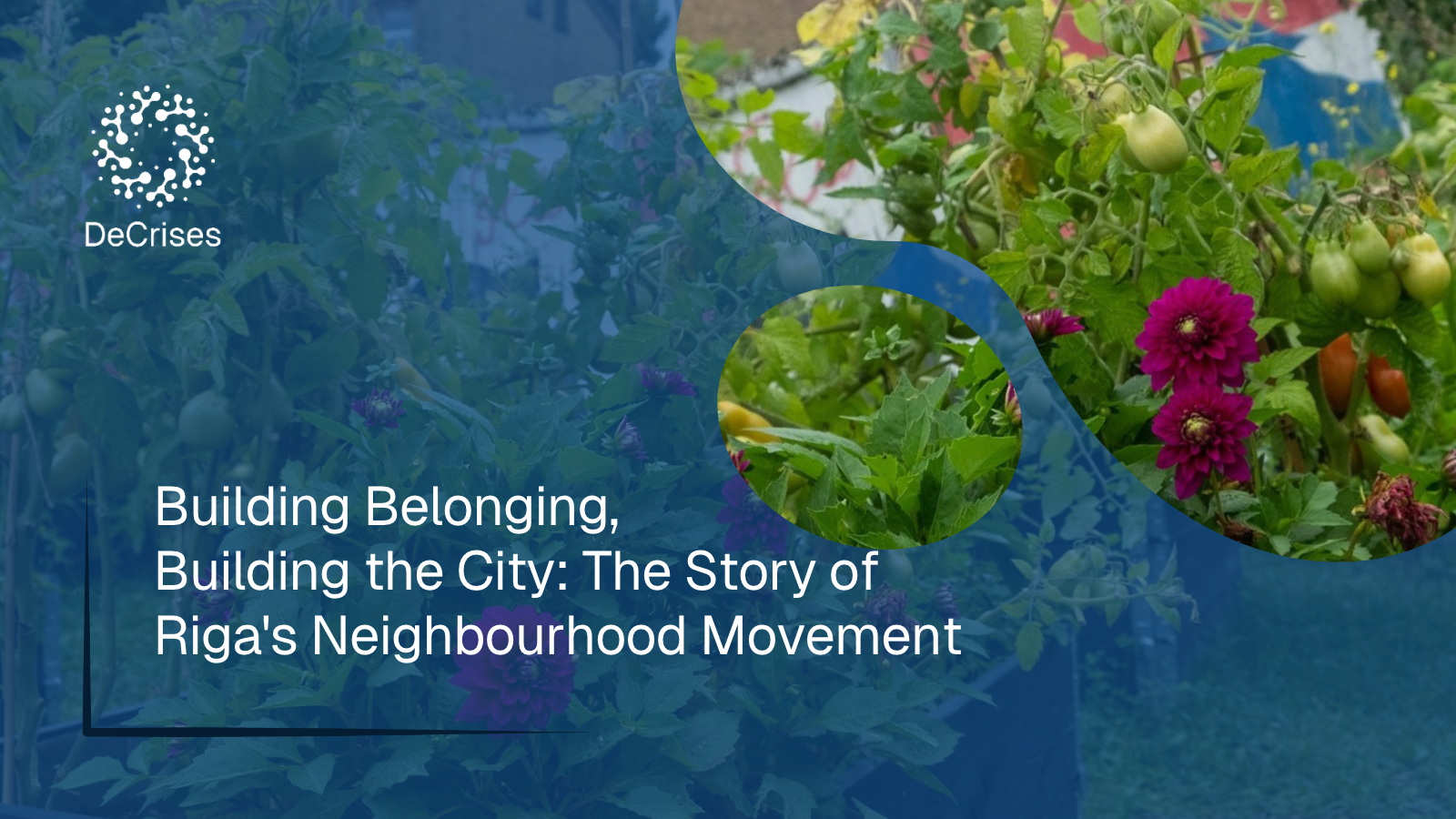
Building Belonging, Building the City: The Story of Riga's Neighbourhood Movement
Riga is often described as the metropolis of the Baltics – a city known for its Art Nouveau architecture, vibrant cultural life, world-class opera house, and more than half a million residents. Yet in everyday life, Riga is much more than its Old Town and central streets. The city is made up of 58 neighbourhoods, each with its own character, history, and people. It is within these neighbourhoods that a sense of belonging begins to take shape – the feeling that this place is our own.
In recent years, more residents have become interested in taking an active role in shaping the places where they live. Out of this movement grew the Riga Neighbourhood Alliance, an organisation that today brings together 39 neighbourhood associations and represents their interests in dialogue with local and national authorities. Yet the Alliance is more than a formal organisation. It is a meeting place for people, ideas, and a shared desire to improve the communities they call home: “Neighbourhood issues are largely pragmatic rather than political – people simply want to get practical things done,” says Maris Jansons, the Chairman of the Board of the Riga Neighbourhood Alliance.
Interestingly, many neighbourhood associations began as protest initiatives. Residents came together to protect parks, streets, or other places they cared about. Over time, these initiatives evolved into stable organisations that not only respond to problems but also take an active role in shaping the future development of the city: “There was a group in Bolderāja [one of the neighbourhoods in Riga - auth.] that was perhaps on the borderline of being a neighbourhood association. But in any case, they offered to join forces to fight the Freeport of Riga over the zoning plan. They won the battle. They managed to suspend the zoning plan for two years and freely present their case before the Constitutional Court. They were the first to achieve the right for a neighbourhood residents’ association to go before the Constitutional Court. There had been no such precedent before,” remembers Jansons.
At its heart, however, the neighbourhood movement is not about protest. It is rooted in something more fundamental: a strong emotional and practical sense of belonging to a particular place – what might simply be called local patriotism. It is the desire to care for one's surroundings and to create what could be described as a livable life: a life tuned to values that resonate, and an environment where people can find their own tonality and allow their voice to be heard. It is this feeling that brings together people with different backgrounds and life experiences. The neighbourhood becomes a shared space where the question is not “What divides us?” but rather “What can we achieve together?”
Literary beautiful and vivid example comes from the neighbourhood of Bieriņi, where residents began decorating their mailboxes. What started as a small individual initiative gradually spread through the neighbourhood, inspiring others to participate. "We have learned that we need projects where residents can come, do something practical, and immediately see the results,” concludes Jansons. In English, this is sometimes referred to as 'instant gratification' - visible and immediate results that give people a sense of achievement and encourage further involvement.
This is also where the neighbourhood movement gains particular importance in the context of transition. We often speak about transition through the language of major policy goals – climate neutrality, energy efficiency, digitalisation, or smart city development. In practice, however, these transformations take place in very specific places and communities. They can be seen in neighbourhood initiatives that green public spaces, establish community gardens, promote the reuse of resources, and use digital tools to support communication, decision-making, and mutual assistance. People get involved not because someone explains the 2030 climate policy to them, but because on a Saturday, for example, they plant a tree with their neighbours, tidy up the yard, or create a community garden – and immediately see the improvement in their local environment.
In this sense, the Riga Neighbourhood Alliance functions as a hub – even a kind of living laboratory – where residents become active participants in creating change. As Head of the Alliance points out: “You realise that other people are facing similar challenges. You can learn new ways of addressing problems and discover new ideas.”
So, as it can be noticed already, this transition is not only about technology or infrastructure. New mobility solutions, climate adaptation measures, and digital governance tools all depend on something less visible but equally important: trust and cooperation between people. These capacities are built at the neighbourhood level through shared events, discussions, and initiatives where residents learn both how to solve practical problems, and how to work together towards common goals.
The Alliance is also actively involved in strengthening civic preparedness. It organises training sessions, hikes, and practical simulations in which residents worked alongside emergency service experts to explore, for example, what would happen if a local evacuation centre suddenly had to accommodate hundreds of additional people. Residents also learned practical skills such as using radios and navigating outdoors. As Jansons notes, some of the most successful activities are surprisingly simple: “It [hiking – auth.] is an excellent community-building activity. People spend three or four hours walking together, talking to one another, and learning something new.”
An important role is played by the community centre in Sarkandaugava, which has become a gathering place for a wide range of initiatives – from gardening and repair workshops to cultural and educational activities. Here, people from different social backgrounds meet in everyday settings, creating new forms of collaboration and new ideas.
To be fair, it must be noted that the growing visibility of neighbourhood associations should not be confused with widespread public engagement. Many associations still face low participation rates, especially when the enthusiasm for a particular campaign or project begins to wane. It could be the case for any volunteer-based movement. New residents arrive with fresh ideas and energy, while others step back. Neighbourhood associations operate on a voluntary basis, without stable funding, and must invest significant time and expertise to apply for project-based support. Although they are formally invited to participate in public consultations at municipal and national levels, these processes frequently demand technical knowledge, time, and familiarity with governance procedures that many community actors do not possess. Sustained engagement is further constrained by structural barriers: communication with local government often depends on personal connections and persistence, with responses from municipal institutions requiring repeated follow-ups rather than functioning as accessible, routinised interaction. Building a permanent engagement therefore requires ongoing effort, in which capacities for sustained participation are actively supported, ensuring that community actors are not only invited to contribute to the local government’s proposed solutions but are also enabled to develop and maintain bottom-up initiatives of their own, translating local needs into practical solutions that can complement and, at times, reshape top-down approaches.
Nevertheless, the Riga Neighbourhood Alliance offers an example of how urban development can emerge not only from the top down but also from the grassroots. It reminds us that a sustainable and resilient city begins not only in offices and planning documents, but also in courtyards, parks, and conversations between neighbours. The stronger the neighbourhoods become, the stronger Riga becomes as well.