The Role of Civil Society Actors in Green Transition in Baltic Sea Region: DeCrises at the ESA17 Conference
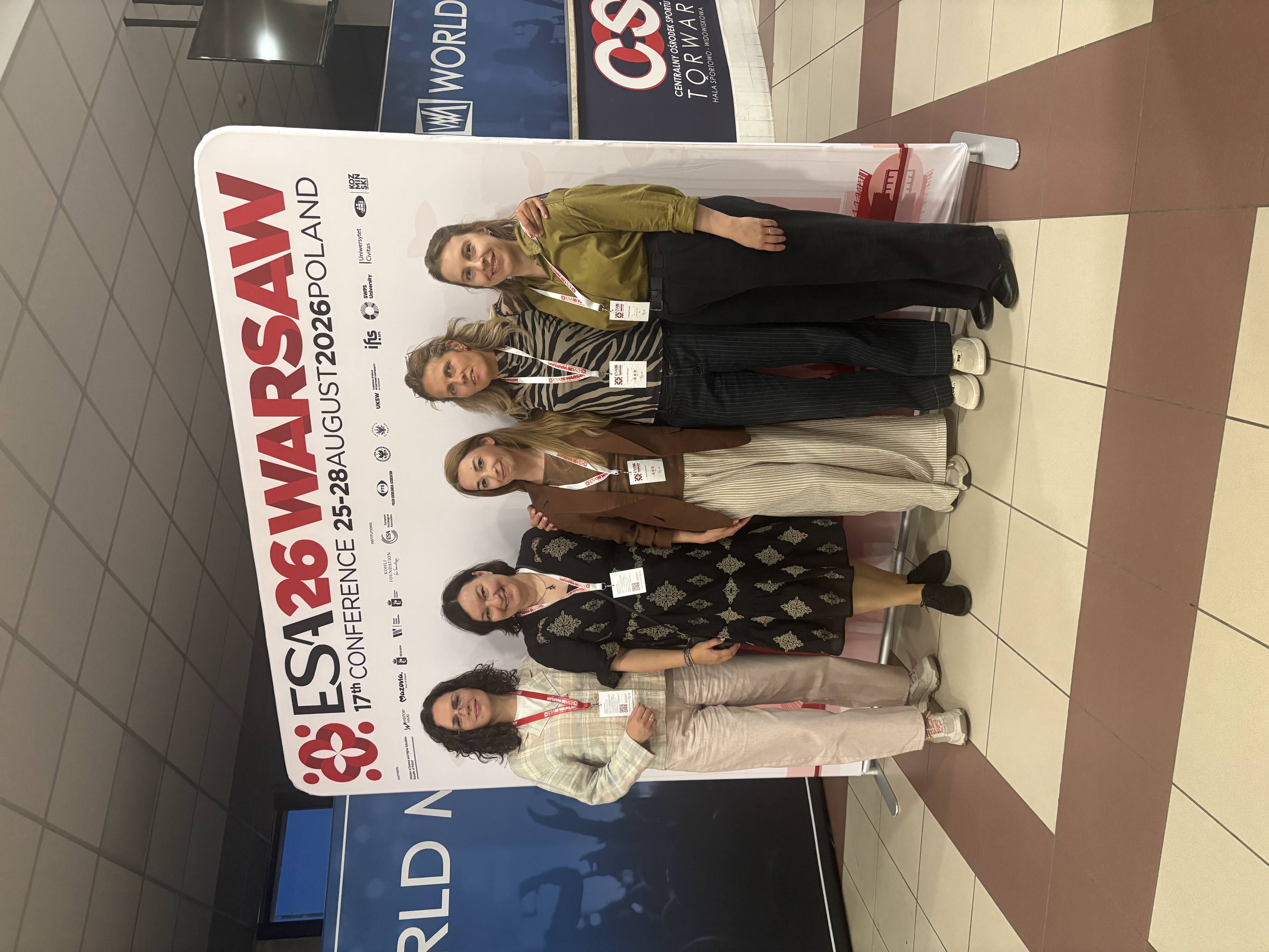
From 25- 28 August 2026, DeCrises members participated in the European Sociological Association conference „Strengthening Democracies: Social Action, Solidarity, and Sustainable Futures“ (ESA17) that took place in Warsaw, Poland.
Aistė Balžekienė, Audronė Telešienė, Natalia Bełdyga and Asta Jurgutė from Kaunas University of Technology (KTU) joined the session of the Environmental Sociology research network (RN12) “Imagining the future”.
During this session, the DeCrises team presented the paper “The Role of Civil Society Actors in Green Transition in Baltic Sea Region”, focused on the shift towards a green future in the Baltic Sea Region, including the challenges and opportunities related to it, and the role of civil society organizations and local communities in this process.
During this presentation, the DeCrises researchers explained that the green transition is a complex process affecting our daily lives, laws, and social systems, as it creates new opportunities for the Baltic Sea region as well as potential regional imbalances. Moreover, they highlighted the role of civil society organizations and local communities in this process - bringing lived experience and local knowledge into policy debates, mobilizing collective action, and holding institutions accountable to ensure that the transition remains fair, just, and democratic.
To map this dynamic, researchers in the DeCrises project analyzed citizen participation across a "ladder of engagement" that ranges from simply receiving information to active consultation, collaboration, and ultimate empowerment. Looking at initiatives in Finland, Latvia, Poland, and Norway, researchers found that while civic groups are highly active in collaborative partnerships - such as digital petition platforms, trade union green job programs, and grassroots environmental stewardship - they are still rarely given final authority.
The presentation concluded that while working together builds a strong sense of community ownership, equitable transition can only be achieved when real, structural decision-making power and control over implementing projects are transferred directly into the hands of citizens.