Bulgaria
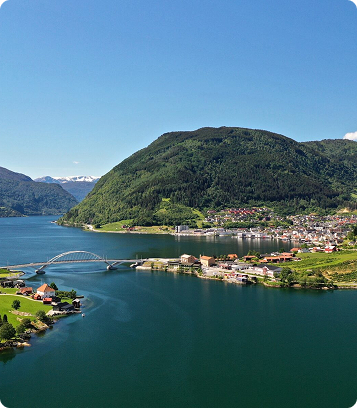
Green Region Vestland (Norway)
Description:
The Green Region Vestland (GRV) project represents a pioneering effort in Norway to translate national green transition goals into regional, business-oriented action. Launched in 2021 by Vestland County's business forum, GRV addresses the challenge of implementing sustainable practices in a region traditionally reliant on oil, gas, and industry. Uniquely characterized as low-bureaucracy and action-driven, the initiative emphasizes local business leadership in achieving green and digital ("twin") transitions. Based on input from 100 regional stakeholders, GRV functions as a collaborative platform involving businesses, incubators, banks, municipalities, and civil society. It facilitates ongoing dialogue, co-creation of green solutions, and supports the regional application of EU green funding. With 16 hubs across industrial, bio, maritime, and marine sectors, GRV stands out as a national model of regionally grounded climate innovation.
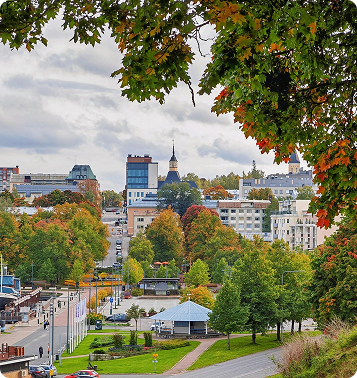
Fingrid Datahub (Finland)
Description:
Fingrid’s Datahub Oy is a centralised information exchange system for the electricity retail market, which contains data from 3.8 million electricity metering points in Finland. It cooperates with electricity market participants, service providers, supervisory authority, legislators, interest organisations, national and international organisations and has established customer and business interest groups participating in grid’s development and its future.
The promise of Datahub is that it streamlines and enables real-time exchange of information. In addition, a centralised service platform is promised to increase competition in the retail market and encourage operators to develop new services. The information exchange system is part of the smart energy system of the future and an in-depth analysis of Datahub will add to our understanding of MLG processes and how they can exploit information exchange for a just twin transition.
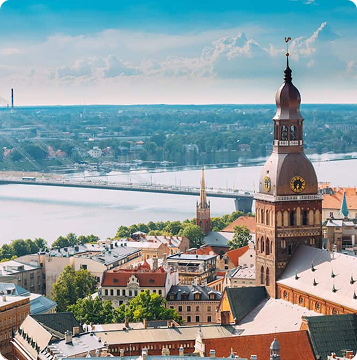
City of Riga (Latvia)
Description:
Up to now, green and the accompanying digital transition in Riga has been largely organised top-down by the Riga City Council, implementing development projects and involving the citizens in the process. However, over the last years, an increasing bottom-up activity has been observed in the neighbourhoods with inhabitants establishing neighbourhood NGOs and organising local activities to improve the living environment in the surroundings. Out of 58 neighbourhoods of Riga, 35 have united under the Riga Neighbourhood Alliance (RNA). The aim of the RNA is to strengthen the role of civil society in city planning and management to ensure sustainable development of Riga City, preserve natural and cultural-historical values and improve the quality of the living environment for Riga residents.
DeCrises will study the case of Riga City neighbourhoods, involving RNA as a major stakeholder, and will provide recommendations for their empowerment in the MLG system.
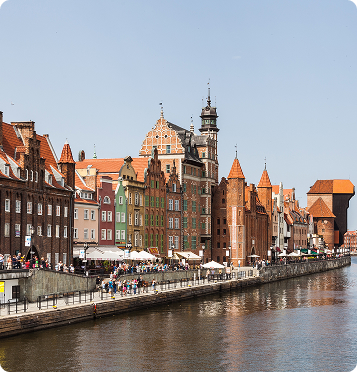
Municipality of Potęgowo (Poland)
Description:
A small rural municipality, Potęgowo is a leader in the twin transition of northern Poland. Digitising the renewable energy generation and monitoring of its 60 renewable energy sources (mainly wind turbines, biogas CHP plant, PV and hydro powerplants) contributes to regional energy security. The energy which is produced is enough to support 10 similar municipalities with electricity and 2 with heat.
The case study of Potęgowo serves as an exemplary model for rural municipalities in Poland. It will enable the formulation of recommendations on how local administration with business, science and citizens can stimulate local energy development and supply security as well as decrease dependence on Russian energy supplies.